Egyptian markets are more than just places to shop. They are lively cultural experiences where history, tradition, craftsmanship, and everyday life come together. From the famous streets of Cairo to the traditional markets of Luxor and Aswan, travelers can discover handmade crafts, aromatic spices, jewelry, textiles, traditional clothing, perfumes, and unique souvenirs.
Exploring the markets of Egypt is a wonderful way to experience local culture while finding special items to remember your trip. Each market has its own atmosphere, products, and traditions, giving visitors a chance to see a different side of Egypt beyond its famous pyramids and temples.
Whether you are looking for authentic Egyptian souvenirs, traditional crafts, local spices, or simply want to experience everyday life, visiting a local market should be part of your Egypt itinerary.
Why Visit the Markets of Egypt?
Walking through an Egyptian market is an experience filled with color, sound, movement, and fascinating aromas. Narrow streets are lined with small shops and stalls, while vendors display their products and welcome visitors from around the world.
The atmosphere can be lively and energetic, but taking your time allows you to appreciate the craftsmanship behind many of the products. Markets are also excellent places to interact with local people and discover traditional products that may not be found in modern shopping centers.
For travelers, Egyptian markets offer the opportunity to:
- Experience local Egyptian culture
- Shop for traditional souvenirs
- Discover handmade crafts
- Buy spices and herbs
- Find jewelry and accessories
- Explore traditional textiles and clothing
- Try Egyptian perfumes and oils
- Practice the art of bargaining
- Experience everyday life in Egypt
Khan El Khalili: Cairo’s Most Famous Market
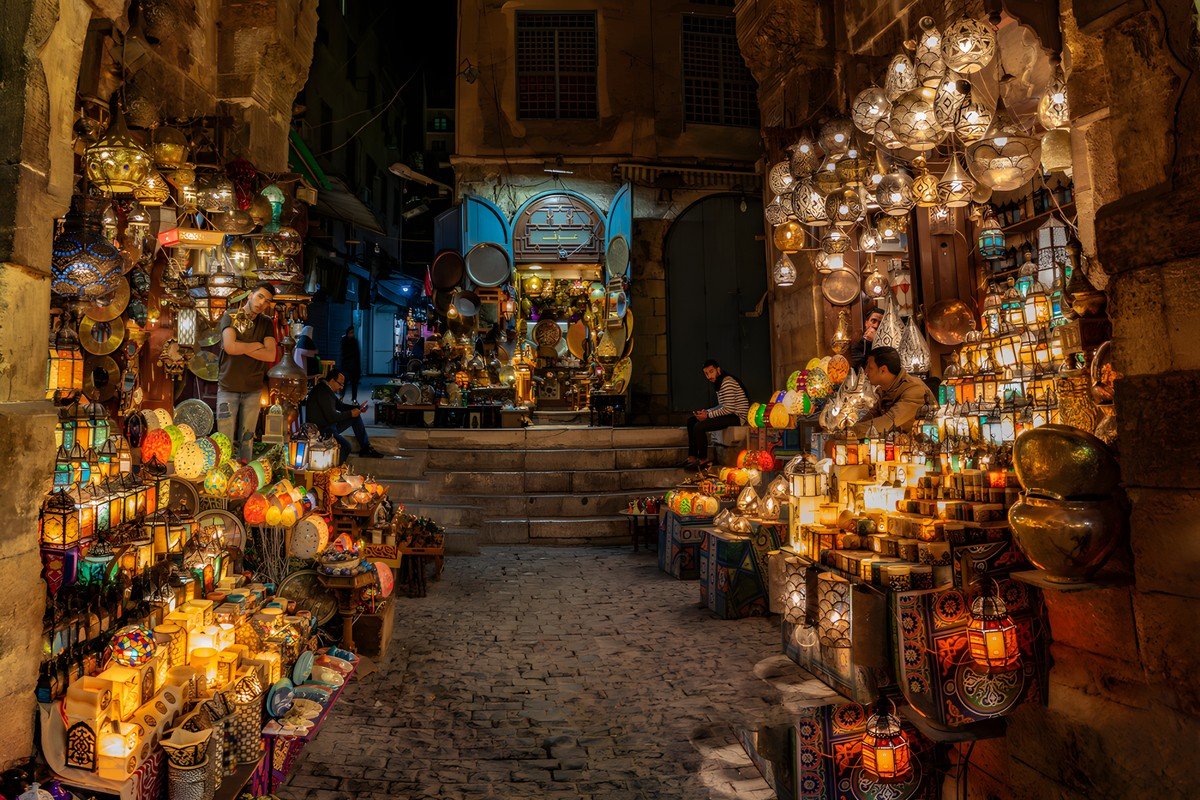
One of the most famous markets in Egypt is Khan El Khalili in Cairo. Located in the historic heart of the city, this traditional bazaar is filled with narrow streets, small shops, workshops, cafés, and colorful displays.
Visitors can find a wide variety of products, including jewelry, perfumes, spices, lanterns, textiles, handmade crafts, and souvenirs inspired by ancient Egyptian culture.
Walking through Khan El Khalili is about more than shopping. The surrounding historic architecture and lively atmosphere make it an excellent place to experience the character of old Cairo.
It is also a great place to search for gifts such as traditional Egyptian lanterns, jewelry, decorative objects, scarves, and handcrafted souvenirs.
Shopping in Luxor
Luxor is famous for its ancient temples and tombs, but the city also offers excellent opportunities for traditional Egyptian shopping.
Luxor’s local markets feature colorful scarves, alabaster statues, handmade crafts, spices, perfumes, jewelry, and souvenirs inspired by ancient Egyptian civilization.
Alabaster products are particularly popular in Luxor. Local artisans create statues, vases, bowls, and decorative pieces using traditional techniques.
Visitors can explore the markets after visiting attractions such as Karnak Temple, Luxor Temple, or the archaeological sites on the West Bank. Combining sightseeing with shopping is an enjoyable way to experience both the ancient and modern sides of Luxor.
Aswan Souk and Nubian Shopping
The Aswan Souk is particularly known for its colorful atmosphere and strong Nubian influence. Shops and stalls display spices, herbs, traditional fabrics, handmade baskets, jewelry, scarves, and local products.
The market provides travelers with an opportunity to discover aspects of Nubian culture while interacting with local vendors and searching for distinctive souvenirs.
Hibiscus, herbs, colorful spices, and traditional fabrics are among the popular products found in Aswan. The vibrant colors and relaxed atmosphere make the souk one of the most enjoyable places to shop in southern Egypt.
What to Buy in Egypt
Egyptian markets offer a wide variety of products, but some items are especially popular with travelers. From spices and handmade crafts to jewelry and perfumes, there are many ways to take a small piece of Egyptian culture home with you.
Egyptian Spices and Herbs
Egyptian spices are among the most popular products to buy in local markets. Colorful displays of herbs and spices fill many stalls with wonderful aromas.
Popular choices include:
- Hibiscus
- Cumin
- Coriander
- Cinnamon
- Mint
- Anise
- Black pepper
- Dried herbs
Hibiscus, known locally as karkadeh, is especially popular and is commonly used to prepare a refreshing Egyptian drink.
If you plan to take spices or other food products home, check the customs and import regulations of your destination country before purchasing them.
Handmade Egyptian Crafts
Handmade crafts are an important part of Egyptian market culture. Many artisans use traditional techniques that have been passed down through generations.
Travelers can find:
- Pottery
- Handmade baskets
- Woven textiles
- Wooden products
- Decorative boxes
- Brass and copper items
- Traditional lanterns
- Hand-painted decorations
Buying locally made crafts is a meaningful way to support local artisans while taking home a unique reminder of your trip.
Egyptian Jewelry
Jewelry is another popular souvenir in Egyptian markets. Visitors can find silver pieces, colorful stones, necklaces, bracelets, rings, and accessories featuring traditional Egyptian-inspired designs.
If you are buying valuable jewelry, take your time and compare different shops. Ask about the materials, quality, and craftsmanship before making a purchase.
For expensive items, it is also a good idea to request a receipt or appropriate documentation.
Traditional Egyptian Textiles and Clothing
Traditional textiles and clothing are widely available in Egyptian markets. Visitors can find colorful scarves, embroidered fabrics, cotton garments, and locally inspired designs.
Lightweight scarves are particularly useful souvenirs because they are easy to pack and can also protect you from the sun while traveling around Egypt.
Egyptian cotton products are another popular choice. When purchasing textiles, check the material and quality carefully to make sure you are getting the product you expect.
Egyptian Perfumes and Oils
Perfumes and oils are another popular choice for travelers. Traditional perfume shops offer a wide variety of fragrances inspired by floral, woody, oriental, and other scents.
Many shops allow visitors to sample different fragrances before choosing a product. Perfume oils can make a personal and lightweight souvenir that is easy to take home.
Bargaining in Egyptian Markets
Bargaining is common in many traditional Egyptian markets and is often considered part of the shopping experience. Prices can vary between shops, especially for souvenirs, crafts, clothing, and decorative items.
A few simple tips can make bargaining more enjoyable:
- Compare prices at different shops.
- Ask about the price before agreeing to buy.
- Remain friendly and respectful.
- Take your time before making a decision.
- Do not feel pressured to purchase anything.
- If you are not interested, politely thank the seller and continue exploring.
The purpose of bargaining is not simply to get the lowest possible price. It can also be a friendly interaction and an enjoyable part of experiencing Egyptian market culture.
Tips for Shopping in Egypt
A little preparation can make your shopping experience more comfortable and enjoyable.
Carry Small Amounts of Cash
Many small shops and market stalls prefer cash. Carrying smaller denominations can also make it easier to pay for inexpensive products.
Keep Your Belongings Secure
Markets can become crowded, especially during busy periods. Keep your wallet, phone, passport, and other valuables secure while walking through busy areas.
Compare Prices
If you are looking for a particular product, explore several shops before buying. Comparing products and prices can help you find better quality and value.
Ask Before Taking Photos
Egyptian markets are excellent places for photography, but always ask permission before photographing vendors, artisans, or local people.
Wear Comfortable Shoes
Traditional markets often involve plenty of walking through narrow streets and busy areas. Comfortable shoes will make your shopping experience much easier.
Check Customs Regulations
If you plan to take spices, herbs, food products, or other natural items home, check the customs regulations of your destination country before purchasing them.
Best Time to Explore Egyptian Markets
The best time to explore outdoor markets is generally during the cooler months from October to April. Temperatures are more comfortable for walking and sightseeing during this period.
During the warmer months, visiting markets in the late afternoon or evening can be more comfortable. This is particularly useful in destinations such as Luxor and Aswan, where daytime temperatures can become quite high.
Evening visits can also offer a lively atmosphere as shops remain open and local streets become more active.
Combining Shopping with Sightseeing
Shopping can easily be added to a sightseeing itinerary in Egypt.
In Cairo, travelers can visit Khan El Khalili after exploring historic Islamic Cairo and nearby attractions.
In Luxor, shopping can be combined with visits to Karnak Temple, Luxor Temple, the Valley of the Kings, and other archaeological sites.
In Aswan, travelers can explore the local souk after visiting the city’s attractions or visiting a Nubian village.
Combining market visits with sightseeing allows travelers to experience both Egypt’s ancient heritage and its modern local culture.
Why Egyptian Markets Are Worth Visiting
Egyptian markets offer much more than shopping opportunities. They provide a window into local traditions, craftsmanship, food, and everyday Egyptian life.
Each market has its own personality. Cairo’s Khan El Khalili combines shopping with historic architecture, Luxor’s markets reflect the city’s connection to ancient Egyptian culture, while Aswan’s souk offers a strong connection to Nubian traditions.
For many travelers, the experience of exploring a market can become just as memorable as visiting Egypt’s famous monuments.
Final Thoughts
Exploring the markets of Egypt is one of the best ways to experience the country beyond its famous archaeological attractions. From the historic streets of Khan El Khalili to the traditional markets of Luxor and the colorful souk of Aswan, each destination offers something unique.
Whether you are looking for Egyptian souvenirs, handmade crafts, traditional spices, jewelry, textiles, perfumes, or gifts, local markets provide countless opportunities to discover something special.
But the most memorable part of Egyptian market shopping may not be the souvenirs you take home. It is the experience of walking through lively streets, meeting local people, discovering traditional craftsmanship, and experiencing a side of Egypt that stays with you long after your journey ends.e as visiting temples, pyramids, or museums.